Loading...

Most American students encounter strict academic formatting rules early in their academic journey, yet over half still make avoidable mistakes that impact credibility. Understanding the real meaning behind these formatting standards is crucial, not just for compliance but for maintaining academic integrity. By clearing up common misconceptions about academic formatting, you will be better equipped to present your research professionally and avoid mistakes that could jeopardize your work.
| Point | Details |
|---|---|
| Importance of Academic Formatting | Academic formatting is essential for maintaining clarity, consistency, and credibility in scholarly work. It goes beyond aesthetics and plays a vital role in academic integrity. |
| Consequences of Poor Formatting | Incorrect formatting can result in paper rejection, diminished credibility, and potential accusations of academic misconduct. Attention to detail is crucial. |
| Mastering Different Styles | Understanding various academic formatting styles like MLA, APA, and Chicago is vital for effective communication across disciplines. Select the appropriate style based on disciplinary needs. |
| Common Formatting Mistakes | Researchers should avoid inconsistencies in citation practices, font usage, and margin settings. Utilizing templates and proofreading can help mitigate these errors. |
Academic formatting represents a systematic approach to presenting scholarly work that extends far beyond mere visual aesthetics. At its core, academic formatting is a comprehensive set of standardized guidelines that ensure clarity, consistency, and credibility in research papers, essays, and academic publications. These guidelines dictate everything from margins and font selection to citation styles and referencing protocols.
Contrary to popular misconception, academic formatting is not just about making documents look neat. Proper formatting plays a critical role in maintaining academic integrity by establishing a universal language for scholarly communication. Researchers worldwide rely on these standardized formats to quickly understand and evaluate academic work, allowing for seamless knowledge transfer across different disciplines and geographical boundaries.
Some common myths about academic formatting persist among students and emerging researchers. Many mistakenly believe that formatting is optional or merely a superficial requirement. In reality, incorrect formatting can lead to significant consequences, including paper rejection, reduced credibility, and potential accusations of academic misconduct. Precise citation and formatting practices are essential for establishing scholarly authenticity.
Understanding academic formatting involves recognizing its core purposes:
These guidelines might seem complex, but they serve a fundamental purpose: creating a universal framework that allows academic ideas to be shared, evaluated, and built upon with maximum clarity and minimal confusion.
Academic formatting styles serve as essential guidelines for scholarly writing, each designed to address specific disciplinary needs and communication standards. Popular academic writing styles like MLA, APA, Chicago, and Turabian represent unique frameworks for presenting research and scholarly work, each with distinctive requirements and applications across different academic fields.
The Modern Language Association (MLA) style is predominantly used in humanities disciplines, particularly literature, language studies, and cultural analysis. Its key characteristics include a simple, clean format with minimal decoration, emphasizing the author's name and page number in citations. Researchers in English, comparative literature, and related fields rely on MLA to ensure consistent and clear documentation of sources.

The American Psychological Association (APA) style is the gold standard in social sciences, psychology, education, and behavioral research. This format prioritizes precision and clarity, featuring a title page, abstract, and in-text citations that include the author's last name and publication year. APA style helps researchers communicate complex scientific information with maximum transparency and reproducibility.
Other significant academic formatting styles include:
Choosing the appropriate formatting style depends on several factors:
Mastering these formatting styles goes beyond mere technical compliance. They represent a professional language that enables scholars to communicate complex ideas effectively, maintain academic integrity, and participate in a global scholarly dialogue.
Comprehensive academic formatting guidelines provide a structured framework for presenting scholarly work, ensuring clarity, professionalism, and consistency across different academic disciplines. These guidelines encompass a wide range of technical and stylistic requirements that go far beyond simple visual presentation, serving as a critical communication tool for researchers and scholars.
The fundamental elements of academic formatting typically include specific requirements for document structure, typography, and citation protocols. Margins are usually standardized at one inch on all sides, with font selections typically limited to readable, professional typefaces like Times New Roman or Arial in 12-point size. Line spacing is conventionally set to double-spacing, which allows reviewers and instructors ample room for comments and enhances overall readability.

Proper citation and referencing represent another crucial aspect of academic formatting, with each formatting style maintaining unique rules for documenting sources. These rules dictate everything from in-text citation placement to the specific information required in reference lists, helping researchers demonstrate intellectual honesty and provide clear attribution for scholarly contributions.
Key universal rules in academic formatting include:
Additional critical considerations for academic formatting involve:
Understanding and mastering these formatting elements transforms academic writing from mere text into a professional, standardized communication method that transcends individual writing styles and disciplinary boundaries.
Academic formatting serves as a critical mechanism for maintaining scholarly integrity, transforming research documentation from a mere administrative task into a fundamental ethical practice. By establishing clear, standardized guidelines, academic formatting creates a transparent framework that allows researchers to demonstrate the origin and credibility of their intellectual contributions.
The citation process represents the most crucial element of academic integrity. Proper formatting ensures that every source is appropriately acknowledged, preventing unintentional plagiarism and giving proper credit to original researchers. Academic writing standards require meticulous attention to citation details to safeguard against potential academic misconduct, making formatting more than a stylistic choice but an ethical imperative.
Beyond source attribution, academic formatting communicates several key aspects of scholarly work:
The consequences of improper formatting extend beyond simple stylistic errors. Researchers who fail to follow established guidelines risk:
Ultimately, academic formatting is not a bureaucratic obstacle but a sophisticated system that protects intellectual property, ensures transparent knowledge sharing, and maintains the highest standards of scholarly communication.
Academic writing presents numerous formatting challenges that can undermine the credibility of scholarly work, making it crucial to understand and proactively address common pitfalls. Researchers and students alike frequently encounter formatting errors that can significantly impact the perception and acceptance of their academic documents.
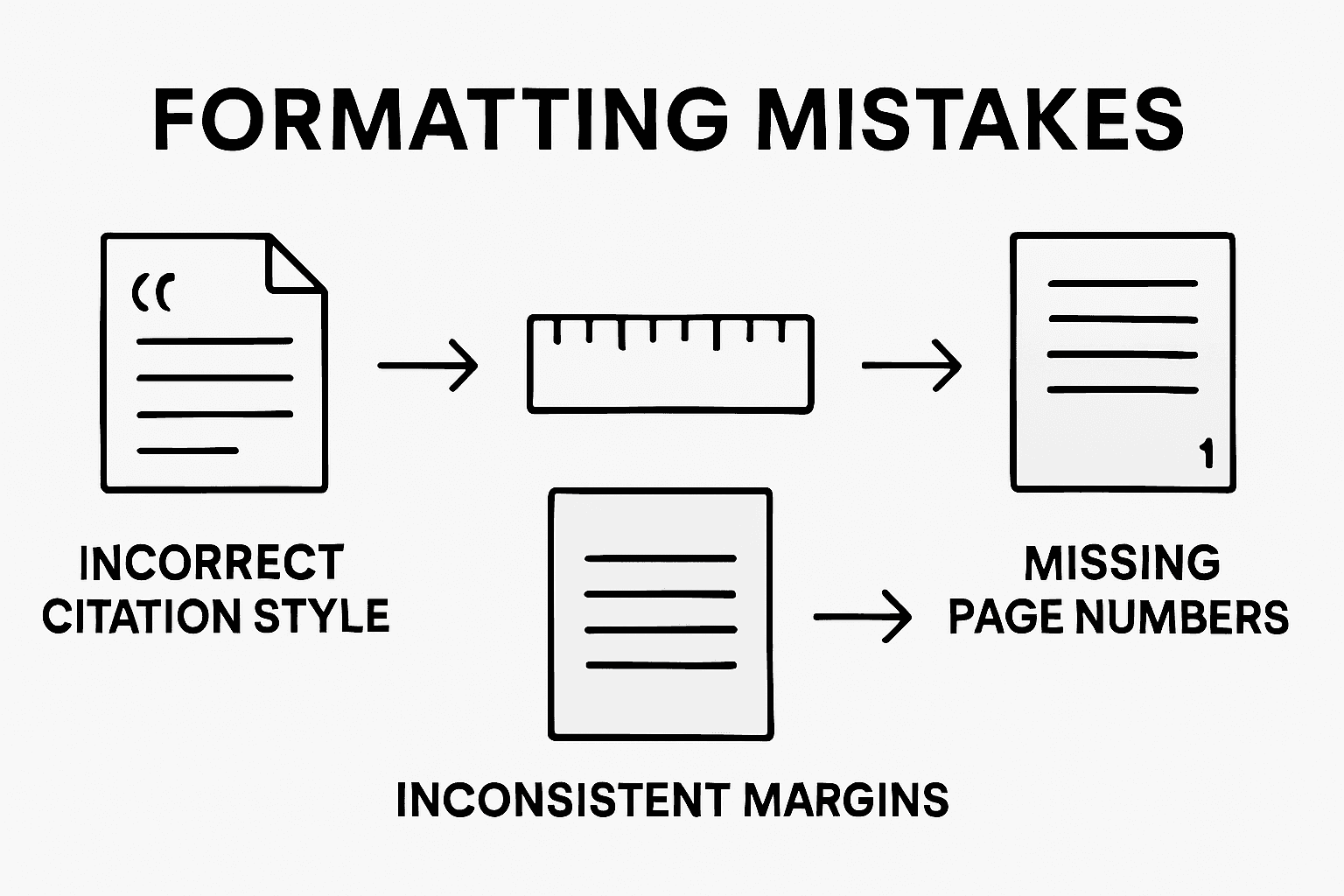
One of the most prevalent formatting mistakes involves inconsistent citation practices. Many writers struggle with maintaining uniform reference styles, mixing different citation formats within the same document or failing to follow the specific guidelines of their chosen academic style. This inconsistency can create confusion and potentially raise questions about the document's academic rigor. Proper attention to detail requires careful review of citation guidelines, including precise punctuation, capitalization, and source information placement.
Common formatting errors that researchers should vigilantly avoid include:
To prevent these formatting pitfalls, students and researchers can implement several strategic approaches:
Ultimately, mastering academic formatting requires patience, attention to detail, and a commitment to professional presentation. Each carefully formatted document represents not just a submission, but a reflection of academic discipline and intellectual precision.
The challenges of mastering academic formatting styles like MLA and APA can feel overwhelming, especially when every detail matters for credibility and academic integrity. Whether you struggle with citation consistency, fear plagiarism risks, or need to present your research with professional polish, trusted tools can make all the difference. Samwell.ai offers a comprehensive solution designed precisely for these challenges, helping you produce original, perfectly formatted essays and research papers that align with the highest scholarly standards.

Discover how Samwell.ai uses advanced AI technology to guide you through formatting complexities with features like the Power Editor for fine-tuning content and real-time citation compliance checks. Don’t let formatting errors undermine your hard work. Visit Samwell.ai now to elevate your academic writing effortlessly and ensure your papers meet every formatting requirement with confidence.
Academic formatting is a systematic approach to presenting scholarly work, encompassing standardized guidelines for things like margins, font selection, citation styles, and referencing protocols to ensure clarity and credibility in academic documents.
Proper formatting is essential for maintaining academic integrity. It helps prevent plagiarism, establishes a universal language for scholarly communication, and enhances the professionalism and credibility of research documents.
The main academic formatting styles include MLA, APA, Chicago/Turabian, Harvard Referencing, IEEE, and CSE. Each style has its own unique requirements tailored to specific academic disciplines, such as humanities or social sciences.
Common mistakes include inconsistent citation practices, incorrect margin settings, improper line spacing, and failure to follow the specific guidelines of the chosen formatting style. Attention to detail and careful proofreading are crucial to avoid these pitfalls.