Loading...

Most American students underestimate how much a strong essay structure can improve their academic performance. Studies show that well-organized essays boost grades by over 30 percent, yet many still struggle with clarity and logical flow. Understanding essay structure not only impresses educators but also makes complex ideas easier to present and understand. Learning these principles helps transform average writing into powerful, clear communication for any academic subject.
| Point | Details |
|---|---|
| Importance of Essay Structure | A well-structured essay effectively conveys complex ideas, guiding readers through arguments with clarity. |
| Types of Essay Structures | Essays typically fall into categories such as descriptive, analytical, persuasive, and critical, each requiring unique structural strategies. |
| Common Mistakes to Avoid | Frequent structural errors include weak thesis statements and inconsistent logical progression, which undermine the essay's effectiveness. |
| Organizational Techniques | Developing a strong thesis and ensuring logical paragraph transitions are crucial for crafting coherent academic arguments. |
Academic essays are precision instruments of intellectual communication, requiring meticulous organization to effectively convey complex ideas. A well-structured essay does more than simply present information - it creates a logical pathway that guides readers through sophisticated arguments with clarity and coherence. Understanding essay structure transforms writing from a mere collection of paragraphs into a strategic intellectual endeavor.
At its core, essay structure represents a deliberate framework for presenting scholarly thoughts. According to academic writing research, an essay should explicitly state its purpose and methodically outline how it plans to achieve that purpose. This means constructing a clear introduction that establishes context, developing body paragraphs with substantive evidence, and concluding with a meaningful synthesis of arguments. The structural elements work together like a finely tuned machine, each component supporting and enhancing the overall intellectual objective.
Effective academic writing encompasses multiple structural approaches. Research indicates that academic essays typically fall into four primary categories: descriptive, analytical, persuasive, and critical. Each type demands a unique structural strategy. A descriptive essay might use chronological organization, while an analytical essay requires a more complex framework that deconstructs concepts systematically. The persuasive essay needs a structure that builds compelling arguments progressively, and critical essays demand a nuanced approach that evaluates multiple perspectives simultaneously.
Successful essay structure isn't just about following rules - it's about creating an intellectual journey that transforms raw information into meaningful understanding. By mastering structural principles, students can elevate their writing from basic composition to sophisticated academic communication. The structure becomes a lens through which complex ideas are refined, analyzed, and presented with precision and intellectual elegance.
Essay structures are strategic frameworks that transform raw academic thoughts into coherent, compelling arguments. Each essay type demands a unique architectural approach, reflecting the specific intellectual goals of the writing. Essay formats guide different communication strategies, enabling students to craft precise, targeted academic compositions that effectively communicate complex ideas.
The primary essay structures include descriptive, analytical, persuasive, and critical frameworks. A descriptive essay typically follows a chronological or spatial organization, presenting information in a sequential and methodical manner. Analytical essays require a more intricate structure that breaks down complex concepts, examining them through multiple perspectives and presenting evidence-based insights. Persuasive essays demand a progressive argumentative structure that systematically builds compelling claims, while critical essays necessitate a nuanced approach that evaluates and challenges existing perspectives.

Successful essay structures share fundamental architectural principles. Each must include a clear introduction that establishes context and thesis, body paragraphs that develop substantive arguments with supporting evidence, and a conclusion that synthesizes key insights. The internal logic of these structural elements determines the essay's intellectual coherence. Effective writers understand that structure is not merely a mechanical requirement but a sophisticated intellectual tool that shapes how readers perceive and engage with academic arguments.
Mastering different essay structures requires practice, analytical thinking, and a deep understanding of academic communication. Students must learn to select and adapt structural approaches based on their specific writing goals, discipline requirements, and the complexity of their research questions. Comprehensive essay organization techniques can transform academic writing from a formulaic exercise into a dynamic, intellectually engaging process of knowledge creation and critical analysis.
Structure is the intellectual scaffolding that transforms scattered thoughts into coherent academic arguments. Standard argumentative essay frameworks provide a systematic approach that guides readers through complex ideas with precision and clarity. By establishing a clear organizational pattern, writers create a logical pathway that helps audiences navigate sophisticated intellectual terrain.

Academic essays require a methodical approach to presenting ideas. Explicit statement of purpose and systematic evidence progression are crucial for maintaining logical integrity. A well-structured essay typically follows a three-part blueprint: a compelling introduction that establishes the central thesis, body paragraphs that develop nuanced arguments with supporting evidence, and a conclusion that synthesizes key insights. This architectural framework ensures that each paragraph serves a specific intellectual function, building a comprehensive and persuasive narrative.
The logical progression of ideas is critical to effective academic communication. Each paragraph should function like a building block, connecting seamlessly to create a cohesive intellectual argument. Transitional phrases, clear topic sentences, and a consistent argumentative thread help readers understand the relationships between different concepts. This structural approach prevents fragmentation, ensuring that complex ideas are presented with clarity, coherence, and analytical rigor.
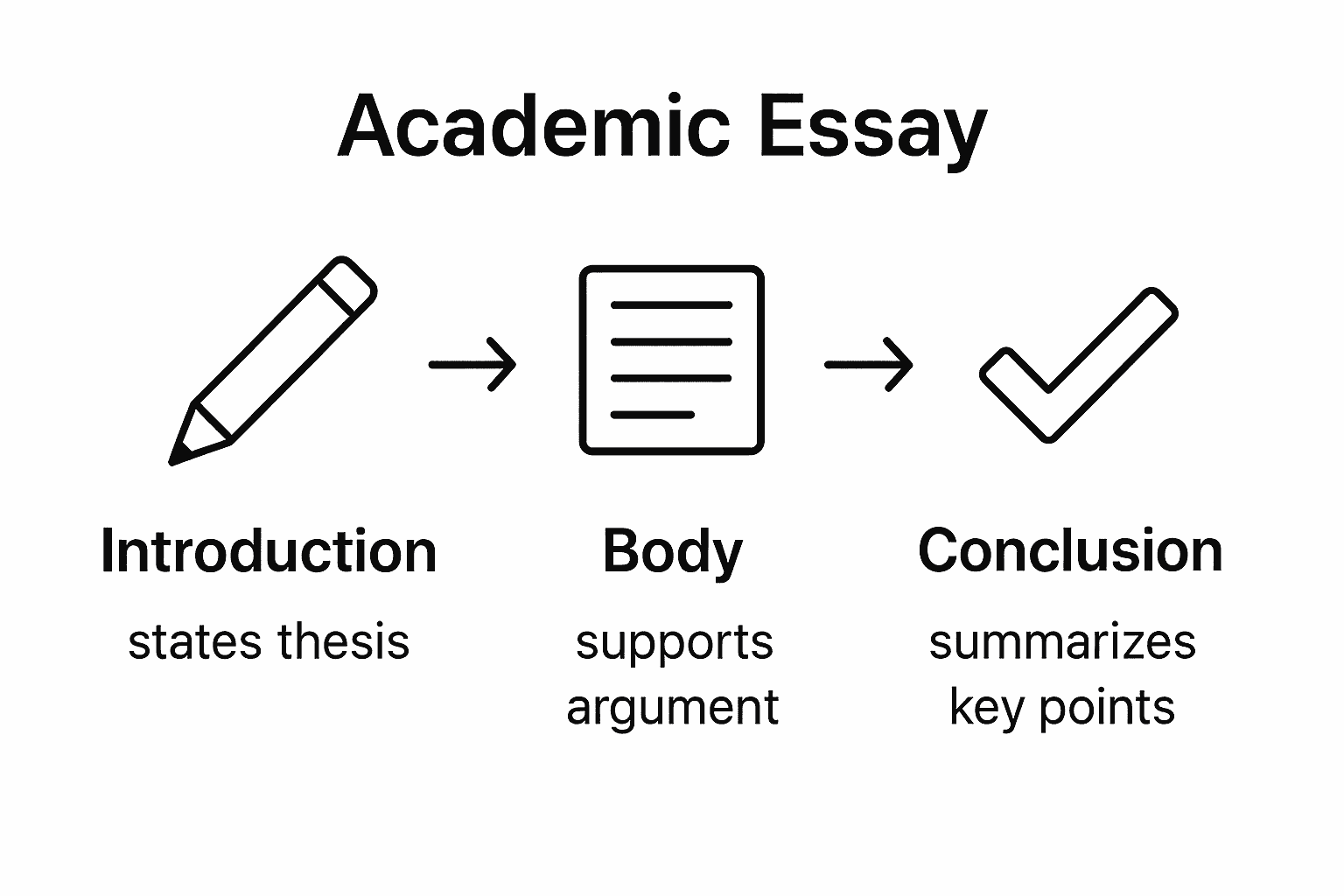
Mastering structural techniques requires deliberate practice and analytical thinking. Students must learn to construct essays that are not just grammatically correct, but intellectually compelling. Simple essay examples can provide valuable insights into how sophisticated ideas can be communicated through strategic structural choices. By understanding how structure shapes comprehension, writers can transform their academic writing from a mechanical exercise into a powerful tool for intellectual exploration and communication.
Standard argumentative essay structures provide a blueprint for academic writing, yet many students consistently stumble into predictable structural pitfalls. These common mistakes can undermine even the most well-researched arguments, transforming potentially compelling essays into confusing and ineffective compositions. Recognizing and avoiding these structural errors is crucial for academic success.
One of the most frequent structural mistakes is the weak thesis statement. Many students craft vague, overly broad, or non-argumentative thesis statements that fail to provide clear direction for the essay. A strong thesis should be specific, debatable, and serve as a precise roadmap for the entire argument. Another critical error involves paragraph organization - students often create paragraphs that lack a clear topic sentence, fail to connect logically to the thesis, or include irrelevant information that dilutes the overall argument.
Inconsistent logical progression represents another significant structural challenge. Academic essays require a deliberate, systematic approach to presenting ideas. Each paragraph should build upon the previous one, creating a cohesive intellectual journey. Students frequently make the mistake of jumping between ideas without proper transitions, using disconnected paragraphs that read more like independent thoughts than a unified argument. This fragmentation destroys the essay's credibility and makes it difficult for readers to follow the underlying argument.
The conclusion often suffers from its own set of structural mistakes. Many students simply repeat the introduction or provide a superficial summary instead of synthesizing the essay's key insights. Essay structure guides emphasize that a strong conclusion should do more than restate points - it should demonstrate the broader significance of the argument, offering a final perspective that elevates the entire essay. By understanding and avoiding these common structural pitfalls, students can transform their academic writing from mediocre to exceptional.
Crafting a well-organized academic essay requires strategic planning and systematic approach. Establishing a clear purpose and methodical evidence progression forms the foundation of successful academic writing. Students must develop a comprehensive organizational strategy that transforms complex ideas into coherent, compelling arguments.
The initial stage of essay organization involves developing a robust thesis statement. This critical element serves as the intellectual compass for the entire essay, providing direction and focus. Effective thesis statements should be specific, arguable, and sufficiently narrow to be thoroughly explored within the essay's scope. Students should invest time in refining their thesis, ensuring it encapsulates the core argument and provides a clear roadmap for the subsequent paragraphs.
Essay formatting techniques emphasize the importance of strategic paragraph development. Each paragraph should function as a discrete unit of argument that simultaneously supports the overall thesis. Begin with a strong topic sentence that connects directly to the thesis, follow with evidence and analysis, and conclude with a transitional sentence that bridges to the next paragraph. This approach creates a logical progression of ideas that guides readers through the intellectual journey of the essay.
Mastering essay organization requires practice and a systematic approach to intellectual communication. Students should develop a pre-writing process that includes outlining, research, and careful revision. By creating a structured framework that allows ideas to flow logically and build upon one another, writers can transform complex academic concepts into clear, persuasive arguments. The goal is not just to present information, but to create an intellectual narrative that engages and convinces the reader.
Struggling with organizing your essay effectively to ensure clarity and logical flow Often the challenge lies in crafting a strong thesis and maintaining consistent argument progression as highlighted in the article on why essay structure is crucial for academic success Samwell.ai understands these pain points and offers innovative solutions tailored to help you master essay organization and structure with ease

Unlock your potential with Samwell.ai’s advanced AI-driven tools that provide guided essay outlines, a powerful editor for refining your arguments, and real-time compliance with citation standards Perfect for students seeking to elevate their writing from basic composition to compelling academic narratives Act now to harness technology that supports your intellectual journey and helps you avoid common structural mistakes Visit Samwell.ai and explore how to transform your essay writing starting today Learn more about strategic essay structure and discover comprehensive tips on organizational techniques to build essays that are both clear and persuasive
A well-structured essay enhances clarity, coherence, and logical flow, making it easier for readers to follow complex arguments and ideas.
The primary types of essay structures include descriptive, analytical, persuasive, and critical frameworks, each requiring different organizational strategies.
To avoid structural mistakes, ensure you have a strong thesis statement, logically organized paragraphs, and a conclusion that synthesizes your key insights rather than simply summarizing.
Establish a clear thesis, use strong topic sentences for each paragraph, provide evidence and analysis, and transition smoothly between ideas to create a logical narrative.